2026
ATSEDEN GARAIA – TAC!26
Location: Sestao, Bizkaia
Client: TAC Festival
¿Y si los trabajadores hubiesen logrado derrocar los AHV?
Entender el patrimonio industrial de los Altos Hornos de Vizcaya en Sestao, y en todo la margen izquierda, ha de pasar por contemplar la historia completa de los trabajadores de los que esta gran explotación metalúrgica se nutría.
Este ejercicio sobrepone un nuevo discurso centrado en las condiciones laborales y complejidades sociales de esa nueva clase obrera sobre la ya manida narrativa de la industria como proeza y reto, que deja trás de sí gigantes de hierro que admirar como ruinas grandiosas hoy día.
Atendiendo al aspecto humano de la revolución industrial se consigue leer la infraestructura como contexto físico opresor que fuerza los límites de lo que venía considerándose “trabajo”, generando así el auge del sindicalismo para proteger unos derechos hasta entonces nunca reivindicados.
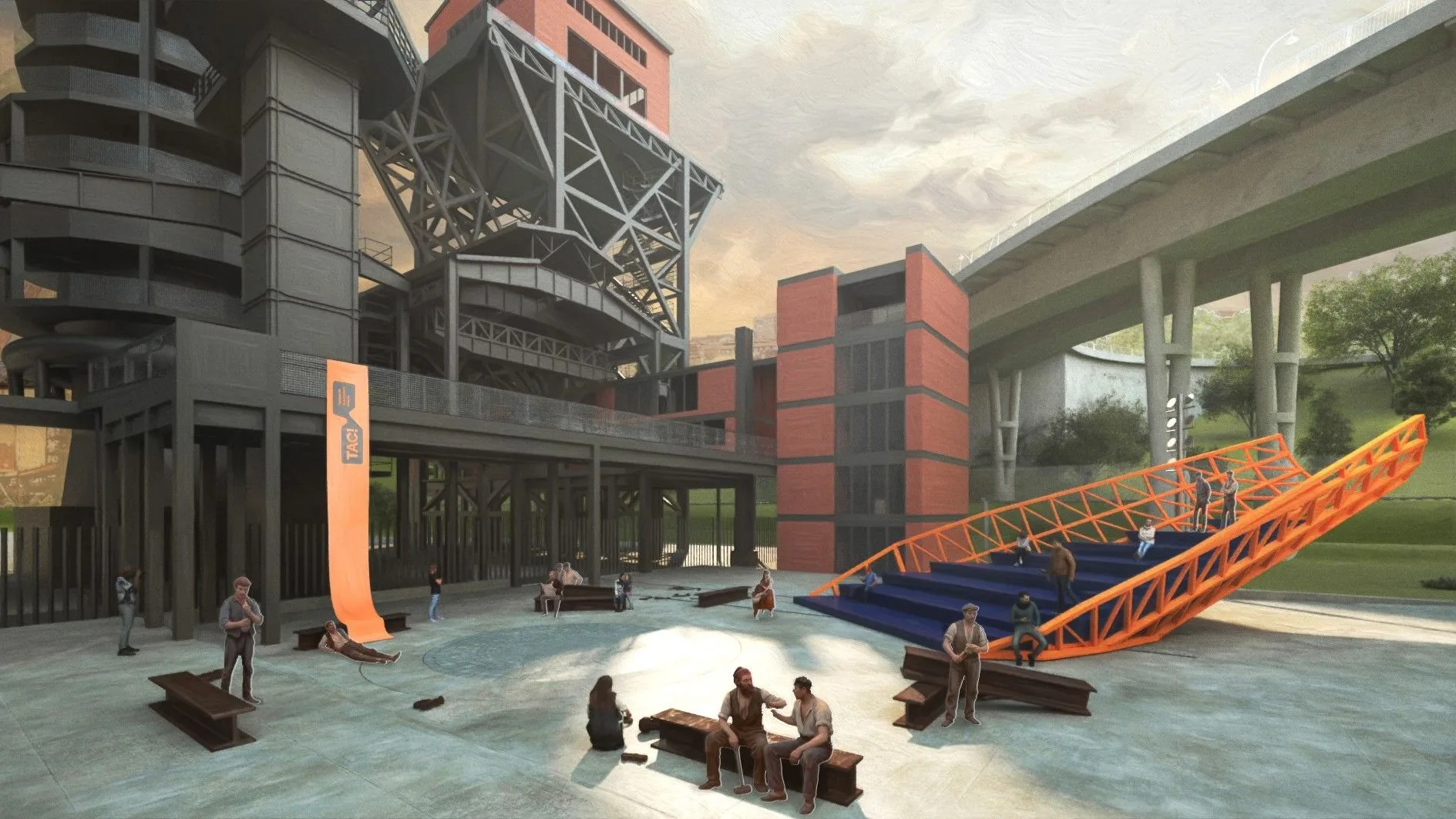
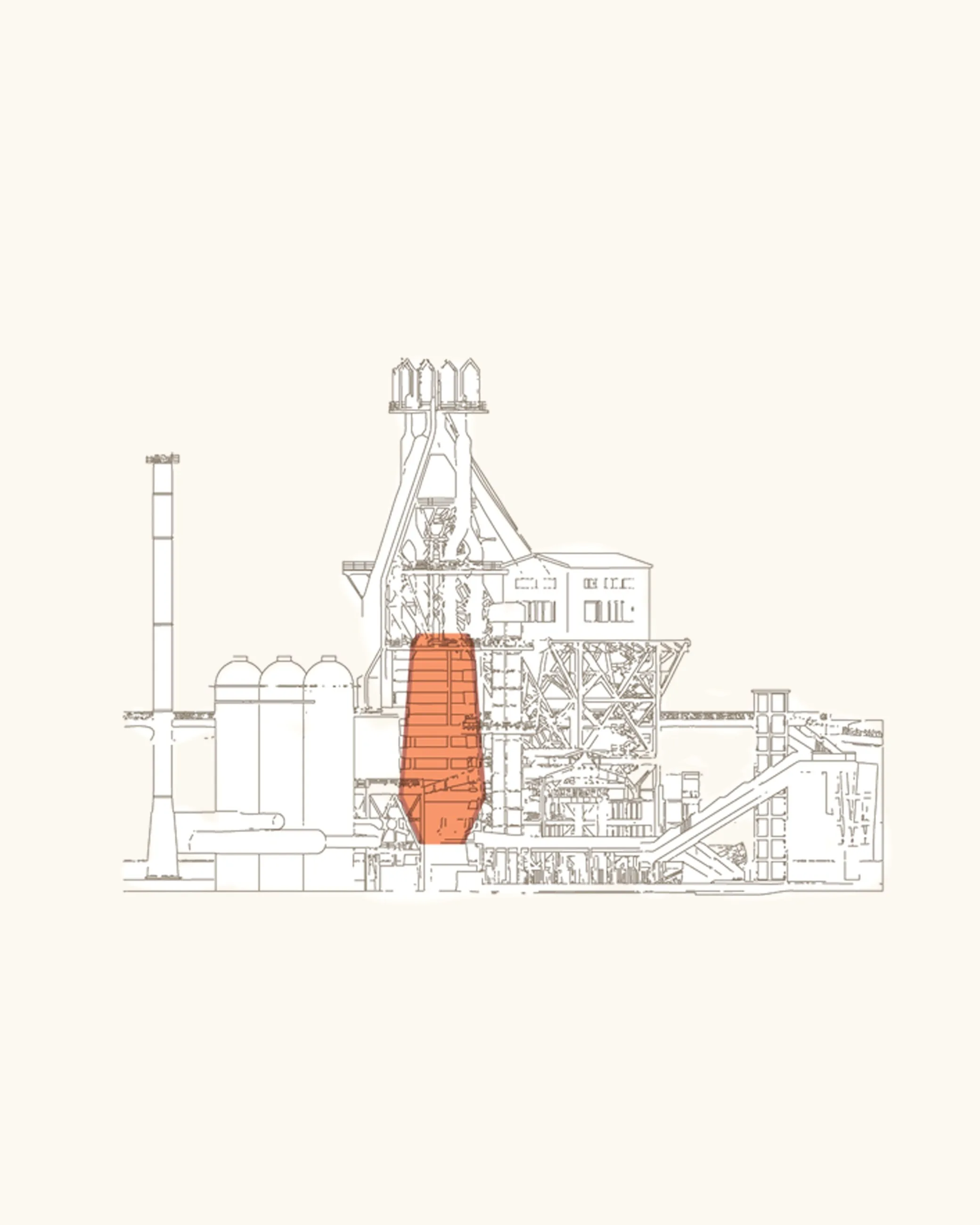
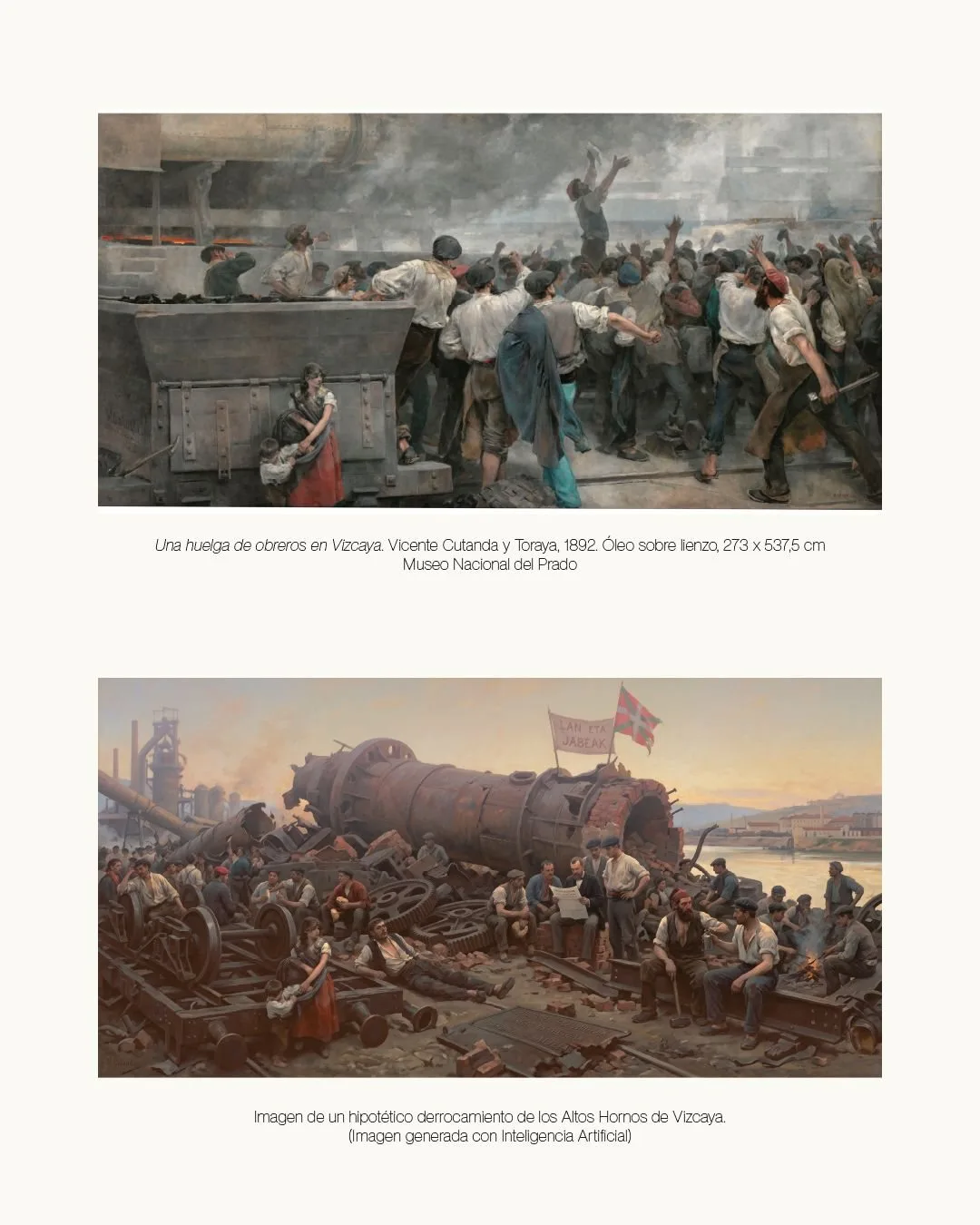
ATSEDEN GARAIA toma como punto de referencia una de las diversas huelgas de trabajadores de los AHV, en las que cabe plantear un escenario hipotético en el que los manifestantes no solamente logran sus metas como sindicato sino que logran tomar el alto horno como conquista y derrocamiento, derribando el elemento arquitectónico como símbolo de la victoria.
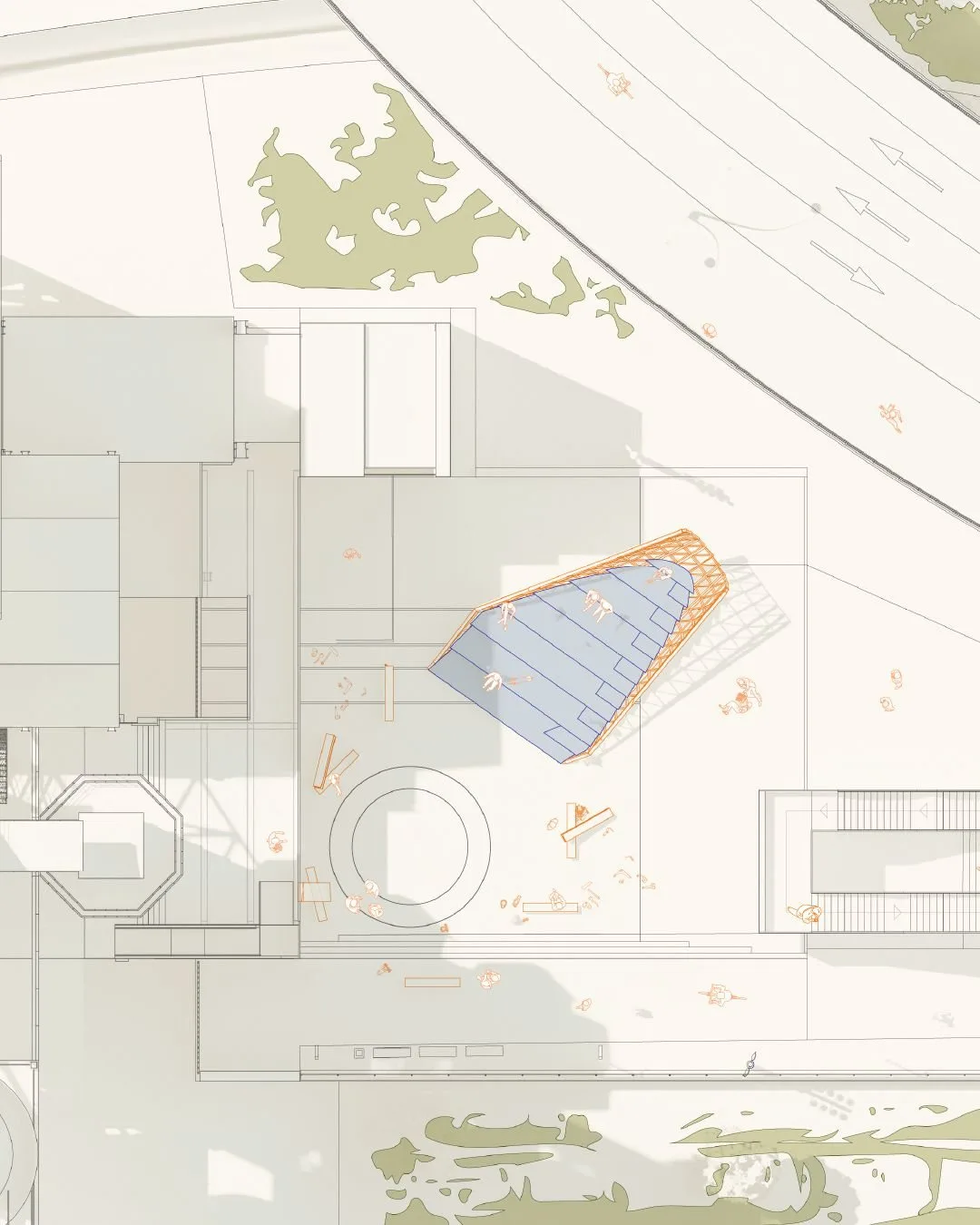
Este esperanzador pasado disidente adopta la no-producción que una huelga usa de por sí como estandarte y congela en el tiempo la infraestructura derribada, estableciendo el descanso como norma, y considerando el anteriormente “cuerpo trabajador” como un cuerpo pensado desde el ocio y la pausa.
¿What if the workers had managed to thrown down the AHV?
Understanding the industrial heritage of the Altos Hornos de Vizcayain Sestao, and across the entire Left Bank, requires looking at the complete history of the workers who fueled this vast metallurgical operation.
This exercise overlays a new discourse—centered on the labor conditions and social complexities of this emerging working class—onto the well-worn narrative of industry as a feat and challenge, one that leaves behind iron giants admired today as grandiose ruins.
By focusing on the human aspect of the Industrial Revolution, the infrastructure can be read as an oppressive physical context that pushed the boundaries of what was previously considered "work", thereby sparking the rise of unionism to protect rights that had never before been claimed.
ATSEDEN GARAIA takes as its starting point one of the various strikes by AHV workers, proposing a hypothetical scenario in which the protesters not only achieve their union goals but also conquer and overthrow the blast furnace, toppling the architectural structure as a symbol of victory.
This hopeful, dissident past embraces the non-production that a strike inherently uses as its banner, freezing the toppled infrastructure in time. It establishes rest as the norm and re-envisions the former "working body" as one conceived for leisure and pause.